Life after the peloton: Mathew Hayman reflects a decade on from Paris-Roubaix
08 APR 2026

This Sunday marks 10 years since Mathew Hayman’s incredible Paris-Roubaix triumph. We recently caught up with the Australian cyclist turned sports director to reflect on the biggest day of his 19-year career and what he’s done with his bike and that trophy.
A decade has passed since Mathew Hayman’s famous Paris-Roubaix triumph and while life has changed in so many ways, in others it’s as if time has stood still.
The ergo trainer – which he used to train for the race while nursing a broken arm – remains set up in the garage, and the iconic rock trophy he received for winning it is on display in the lounge.
Although he barely gets time to enjoy either of them these days.
“The ergo is still set up and the kids get on it, sprinting for green jerseys on Zwift,” Hayman says with a laugh.
“And the rock? It’s in the loungeroom, it’s the best spot I could find, but if I’m being honest my daughter’s gymnastics trophies are in front of it now.
“It’s kind of a bit representative that it was a massive thing for me, but life does go on, and maybe in another 20 years’ time it will become centre of the house again.”
The 2016 Paris-Roubaix was the defining moment of Hayman’s professional cycling career, yet as surprising as it may seem, he still hasn’t watched a full replay of it.
“I’ve watched parts of it,” he said.
“Afterwards I was exhausted from all the emotion and seeing the footage was bringing up so much adrenaline in my body.
“But I enjoy the Backstage Pass (video) which has become my memory. (Video producer) Dan (Jones) did such a great job with it and that’s what a lot of people talk about, and it keeps those memories real.”
Those memories are of hoisting cycling’s most unique trophy above his head, standing in the middle of an otherwise regulation outdoor concrete velodrome in northern France on the Belgian border.
What was supposed to be another regulation day on the bike for Hayman turned into one of the most extraordinary days Australian cycling has ever seen. It has become a ‘where were you when’ moment that is every bit as memorable as when Cadel Evans won the Tour de France.
Hayman - a lifelong domestique and road captain – broke his arm six weeks earlier yet somehow got to the start line for his 16th attempt at what he considered the holy grail.
Almost six hours later he found himself at the front of the race and entered the velodrome with Belgian superstar Tom Boonen, Sep Vanmarcke and Ian Stannard after 255 tortuous kilometres of dust and cobbled roads.
“If I talk through the final – there was the conundrum of going into the velodrome thinking ‘I want to be on the podium, it’s a race I love, I’ve dedicated 15 years of my life to try to be good at this race, I don’t want to miss out on the podium’. Because third you go up there, fourth you go straight to the team bus.
“But then at the same time I didn’t pull a turn with Tom (Boonen) when I had the perfect opportunity to confirm that I would at least finish second inside 1km to go.
“So what was it in my head that I decided to swing to the fence and let two other guys come back into play with 400m to go?
“I still wonder who that person was, because it wasn’t a rational decision for someone who wanted to get on the podium so badly.
“But there was a belief I could do it, that I was in the flow, therefore you’re not the one making the decisions if that makes sense.
“I felt super in control, not worrying about the situation, or even feeling like it’s you, like you’re watching somebody else doing it.
“Then crossing the finish line I remember feeling unsure of throwing the hands up … ‘are you sure there’s no one still away? This was for the win wasn’t it? What have I done?’
“It was the fulfillment of a career but I would have done the sport all over again even without the win.
“You do realise it is the journey and not the result, because as great as it was, it also washed away a lot quicker than 19 years in the sport.”
What hasn’t washed away is the dirt and grime from 5hrs 51mins in the saddle that day with his race-winning bike still untouched.
“I had a spot for it when I was in Belgium, it was hung up on the wall at the top of the stairs,” he said.
“Now it’s home in Australia, I’m just trying to find a spot for it actually. I want to re-do the garage a bit and put it up on the wall.”
Hayman went back to Roubaix three more times after his triumph before retiring in 2019, and said it felt different having conquered it.
“I’d been smashing around in Roubaix trying my best to get a result, then there was confirmation,” he said.
“But the big one was going to the Tour de France that year because I hadn’t finished the Tour before that.
“I’d come to GreenEDGE to ride the classics and the Tour and pulled out in 2014 which was the lowest point of my career, I was absolutely gutted after waiting 12 years to ride it.
“So then (in 2016) to go from Roubaix to that Tour de France and feeling like I was an accomplished rider, I knew if I got dropped it was OK, I wasn’t chasing something.
“I got through the Tour and rode around with a different air of confidence, but I do remember them calling my name as I was getting dropped on a climb and they called it ‘the Hayman group’ on ASO Radio, the Roubaix winner was being dropped with 25 other guys.”
While Hayman and his family now call Australia home again, he is still involved with the sport as a director with Jayco-AlUla.
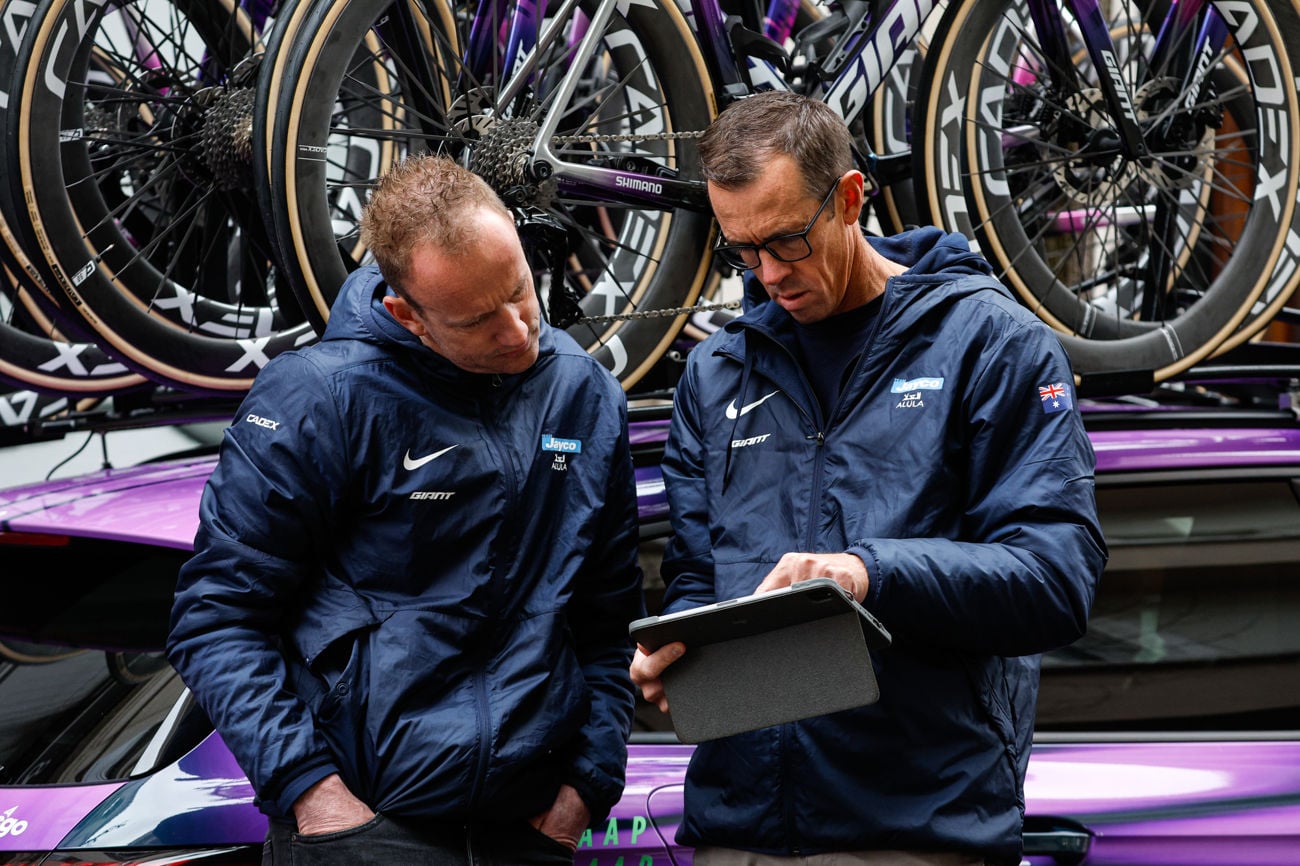
“I live on the Sunshine Coast now, I enjoy getting in the surf, when I’m away with the team the directors and some of the staff we like to run in the morning.
“I’m not a natural runner that’s for sure, but I’m not on the bike enough.
“My youngest son is enjoying riding at the moment, he’s eight years old, so getting out on the mountain bike and the pump track I’m enjoying that.”
His most recent trip to Australia was for the Santos Tour Down Under in January, a race he rode in 12 times throughout his career.
“To be at Tour Down Under in Australia it’s such a tradition and you wouldn’t want to miss it,” he said.
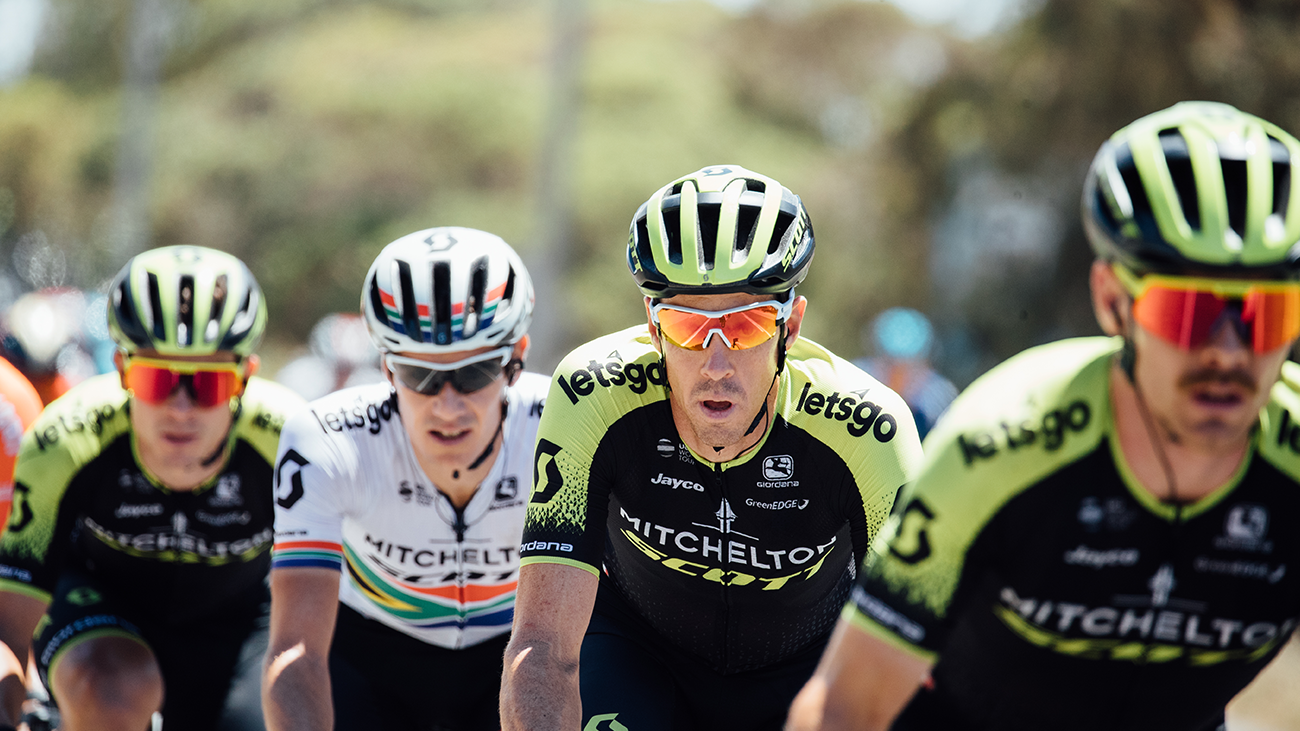
“It’s changed a lot, when Mike Turtur started it, it was to entice pros to come to Australia and now it’s WorldTour with points available and licences up for grabs, so the pressure has changed as has the way the guys race and the parcours we have.
He didn’t plan to go straight into the director’s seat with the team after retiring from the peloton, but Hayman said it had been a smooth transition into the team car.
“In 2019 the plan was to do some DS’ing and learn the ropes but do some stuff with sponsors and corporate as well, but it pretty quickly changed.
“It has its challenges, I finished a 19-year career and didn’t have a lot of skills (outside of cycling), I left for Europe when I was 16 and didn’t have a further education.
“But I felt like I had a lot of knowledge, I’d been a road captain as a rider and wanted to give back and help the team be better and pass on any knowledge I had.
“And I’m learning about people management, logistics, organising and managing a group of people.
“A lot of people overlook that aspect, they think we are just calling the shots over a race radio but there is quite a bit of work to do and it was an eye opener for me.
“I’d been in the bunch for 20 years and didn’t really understand what it’s like to be in a team car. I thought I knew a lot but there was a lot to learn, and luckily I had some really good directors, mechanics and soigneurs to show me the ropes.”
As for whether he is able to maintain his cool and calm demeanour in the team car?
“I want things to go right and I hate losing, but you lose a lot more than you win, so I’m pretty grumpy most of the time,” he said.
“You’re not as in control. As a rider I knew where everyone was, how I felt, how my teammates felt, but I think I find in the car you’ve got to rely on the boys, trust them, they want feedback but at the end of the day you have to trust their judgement as well.”